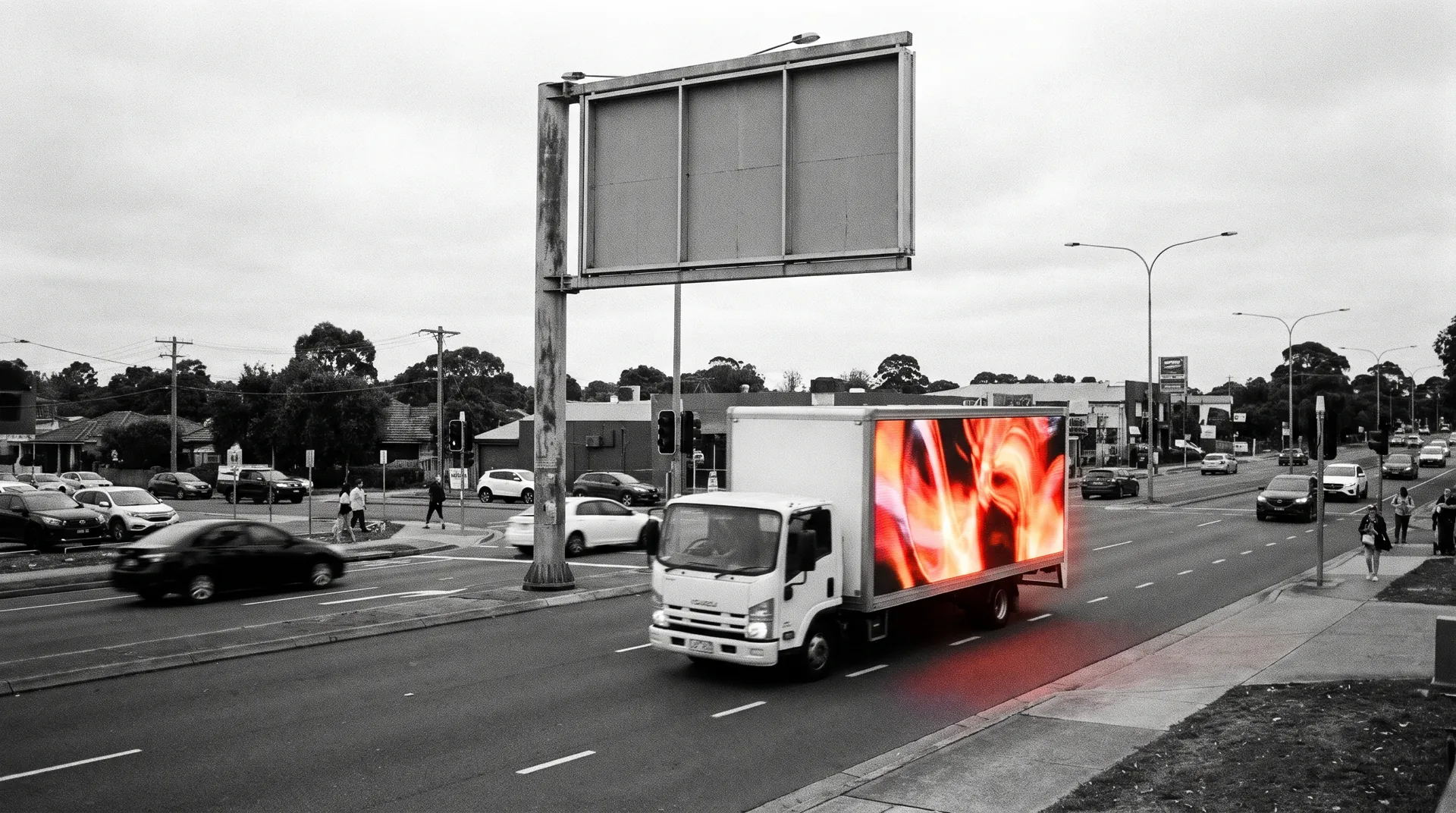
If you have driven down Main North Road at 5pm, walked Jetty Road on a summer Saturday or queued outside Adelaide Oval before a Showdown, you already know where Adelaide's attention goes. It goes to the street. People are stopped at lights, waiting for a table, looking for a park or walking to the game. For a few minutes they are not scrolling, they are looking around.
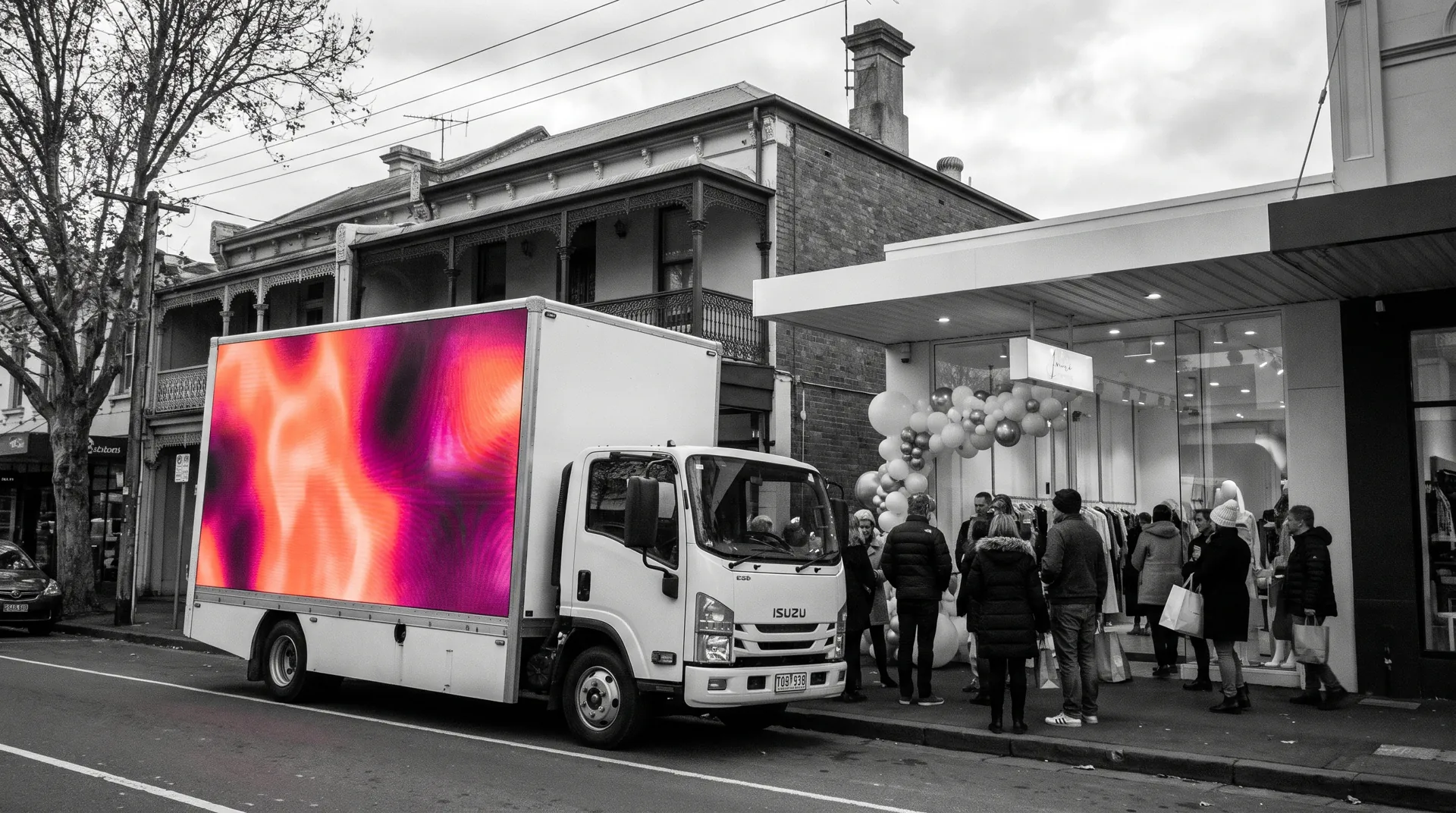
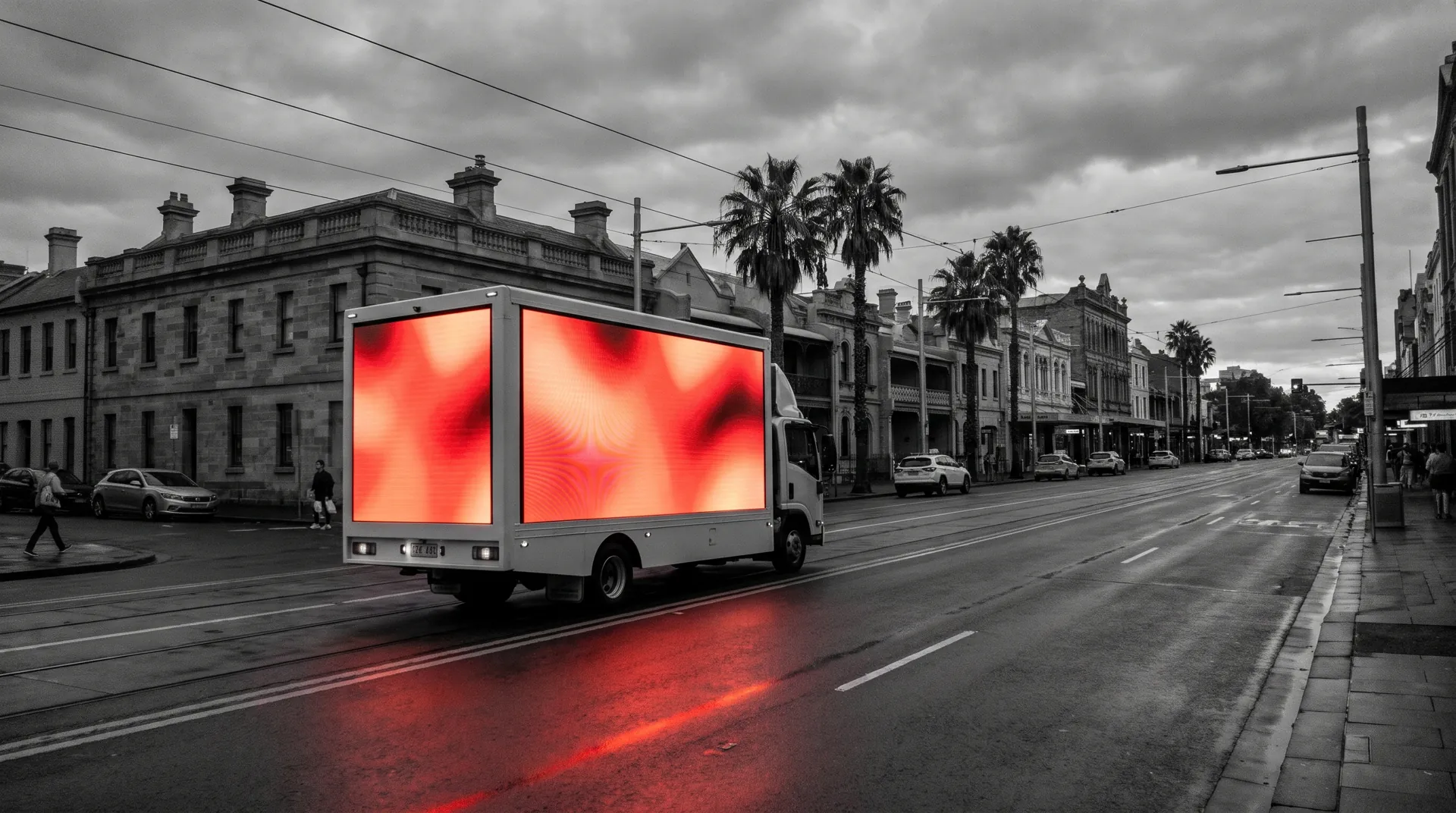
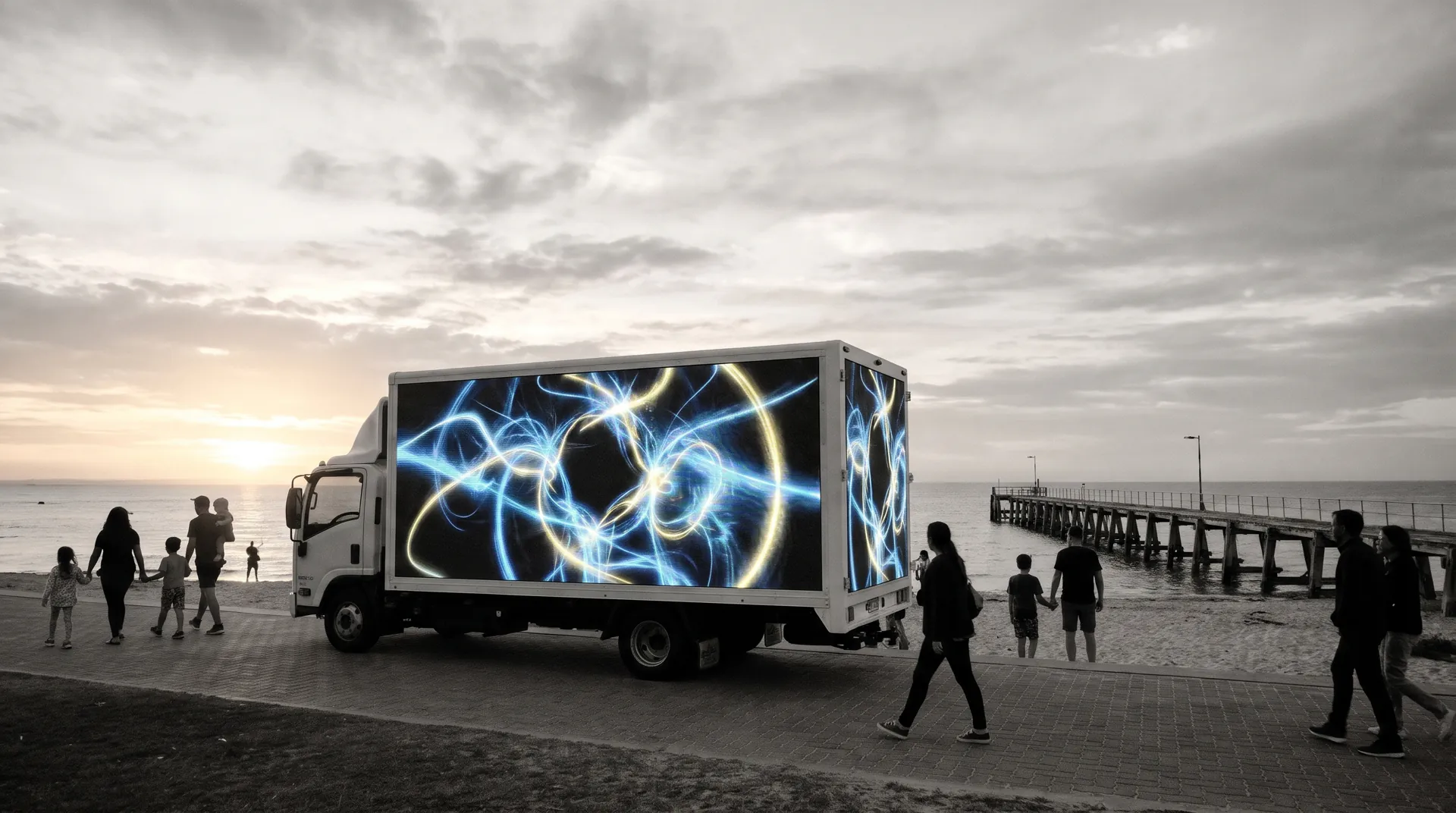
Mobile billboard advertising puts your brand in exactly that moment. A truck fitted with large LED screens drives a planned route, parks where crowds gather and shows your ad to people who are already in the right place to act on it.
This guide covers everything an Adelaide business owner or marketing manager needs to know before booking a campaign: how mobile billboards work, what they cost, which suburbs and events perform best, how to design artwork that reads at a glance, and how to measure what you get back. We have written it from the driver's seat, based on how Digifyads plans and runs campaigns across Greater Adelaide every week.
What is a mobile billboard?
A mobile billboard is an advertising display mounted on a vehicle. Older versions used printed vinyl panels slid into frames on the sides of a truck or trailer. Most modern mobile billboards, including the Digifyads fleet, use digital LED screens instead.
That change matters more than it sounds. A printed panel shows one message for the whole campaign. A digital screen can play video, rotate several ads, switch creative between morning and evening, and update on the day if a sale ends early or a new product lands. It also stays bright and readable at night, which a vinyl panel never could.
Each Digifyads truck carries three screens:
- Left (passenger) side: 3.84m wide × 1.92m high, P4 outdoor LED
- Right (driver) side: 3.84m wide × 1.92m high, P4 outdoor LED
- Rear: 1.92m wide × 1.76m high, P4 outdoor LED
The screens run at 6,500+ nits with automatic ambient light sensors, so the picture stays sharp under the midday sun and does not glare at night. They are IP65 weatherproof, and each truck has a sealed sound system for stationary activations plus GPS hardware that records location, speed, route history and dwell time.
Why mobile billboards work in Adelaide
Adelaide is a city of corridors and precincts. A handful of arterial roads carry most of the daily traffic, and a handful of strips (Rundle Street, King William Road, The Parade, Jetty Road, Henley Square, Prospect Road) carry most of the foot traffic. Big events cluster in a short, predictable calendar: Fringe and the Festival in late summer, Gather Round in autumn, AFL and cricket at the Oval, the Christmas Pageant in November.
Static billboards can only own one of those places. A truck can work all of them in a single day. A practical example:
- 7:30am to 9:00am: inbound commuters on Main North Road and Port Road
- 11:30am to 2:00pm: the CBD lunch crowd around King William Street and Victoria Square
- 4:30pm to 6:30pm: outbound peak along Anzac Highway and Portrush Road
- Evening: parked near a precinct or venue as the dinner or event crowd arrives
That is four different audiences, reached on purpose, with one booking.
It goes to the audience
Traditional outdoor advertising rents you a spot and waits for people to pass it. Mobile billboards reverse that. If your customers are tradespeople, the truck spends its morning near trade supply stores and freight routes in the northern suburbs. If they are young families, it works school pick-up zones and shopping centres. If they are footy fans, it parks on War Memorial Drive two hours before the bounce.
It is hard to ignore
A 3.84m bright screen at eye level, moving through traffic, gets looked at. There is no "skip ad" button, no ad blocker and no feed to scroll past. Drivers stopped at a red light have nothing else to look at for 30 to 90 seconds.
It is flexible
You can book three hours for a store opening or a full month for a brand launch. You can change the route on the day if a road is closed, and you can update artwork between shifts. Few other media let a local business test outdoor advertising without committing to a long contract.
Outdoor advertising is growing, and most of that growth is digital
According to the Outdoor Media Association, Australian out-of-home revenue reached $1.45 billion in 2025, up 11.43% on the year before, and digital formats made up 76.6% of it. The trend continued into 2026, with half-year revenue up 6.5% to $744.1 million and digital accounting for 77.1%. Advertisers are moving money into physical, screen-based media, and mobile LED trucks are one of the most accessible ways for a local business to join in.
How much does mobile billboard advertising cost in Adelaide?
Pricing is usually the first question, so here is ours in plain numbers. Every Digifyads package includes the truck, a professional driver, fuel, all three screens, the audio system and live GPS reporting.
Event Blast: hourly hire
- $99 + GST per hour
- 3-hour minimum ($297 + GST)
- Best for: store openings, flash sales, product drops, event arrivals, evening dining strips
All-Day Takeover: daily hire
- $699 + GST for a full 8-hour day, with you choosing the hours
- Book 3 full days and get the 4th day free
- Best for: product launches, clearance weekends, recruitment drives, broad brand awareness across Greater Adelaide
Custom enterprise and agency campaigns
For multi-truck campaigns, weekly or monthly runs, full vehicle wraps or regional road tours, we put together a tailored proposal.
To put those prices in context: a single day of mobile billboard advertising costs about the same as a modest week of boosted social posts, and less than many print placements. Unlike most digital ads, the truck is physically in front of people for the full eight hours. See the pricing page for current rates and inclusions.
Who uses mobile billboards?
Almost any business with a local customer base can use a truck well, but some categories see results faster than others.
Retail and hospitality. New store openings, seasonal sales, Black Friday, end-of-financial-year clearances and new menu launches. The truck can circle the shopping precinct in the hours before and during the promotion, then park out front to pull people in.
Real estate. Agents use trucks to promote open inspections, auctions and new developments, often by driving the target suburb on the Saturday morning before the open home.
Automotive. Dealerships along Main North Road and Port Road use trucks to promote run-out sales and new models to the exact commuters who pass the yard every day.
Events and entertainment. Concerts, Fringe shows, comedy, nightclubs and sporting fixtures. A truck outside the venue the week before and on the night sells tickets to people already in the area.
Recruitment. Hospitals, construction firms, transport companies and retailers hiring at scale can reach workers on their commute and near competitor sites.
Government, councils and not-for-profits. Public health messages, community events, enrolment drives and awareness campaigns that need to reach a wide cross-section of the city quickly.
Professional services and trades. Lawyers, dentists, builders, solar installers and home service businesses that want local name recognition in a particular group of suburbs.
Which Adelaide areas work best?
Every route is custom, but these are the precincts we plan around most often. Each has its own page with key streets, audience notes and local FAQs.
- Adelaide CBD: King William Street, North Terrace, Victoria Square, the Rundle Mall perimeter, Hindley Street and Adelaide Oval. Office workers, students, shoppers and event crowds.
- Glenelg: Jetty Road, Moseley Square, Anzac Highway and Brighton Road. Tourists, beachgoers and a strong nightlife crowd, especially in summer.
- Enfield: Main North Road's automotive strip, Grand Junction Road and Regency Road. Northern commuters, tradespeople and car buyers.
- Burnside: Burnside Village, Greenhill Road, Portrush Road and Kensington Road. High household incomes and premium retail buyers.
- Unley: King William Road, Unley Road and the Greenhill Road edge of the South Parklands. Boutique shoppers, diners and inner-south professionals.
- Henley Beach: Henley Square, Seaview Road and Henley Beach Road. Beach crowds, families and sunset diners.
- Walkerville: Walkerville Terrace, North East Road and Stephen Terrace. Established, high-income north-eastern households.
Browse every area on the locations page. If your target suburb is not listed, ask anyway. We plan routes across the whole metro area, and further on request.
Timing your campaign around Adelaide's calendar
The same truck can perform very differently depending on when it runs. These are the windows we see booked first each year:
- Summer (December to February): Christmas trading, Boxing Day sales, beach precincts at their busiest, and the build-up to Fringe.
- Mad March and early autumn: Fringe, the Adelaide Festival, WOMADelaide and the start of the footy season, when the city centre and east end are packed every night.
- Gather Round: a whole round of AFL matches in Adelaide brings interstate visitors and very large crowds around the Oval and other venues.
- End of financial year (May to June): sales events for retail, auto and business services.
- Late spring (October to November): the Christmas Pageant, pre-Christmas retail and the start of the summer event season.
Book one to two weeks ahead for weekends and major events. We can often fit last-minute bookings within 24 to 48 hours, but event days fill first.
Designing artwork that works on a moving screen
Good mobile billboard creative follows different rules from social media or print. People see the screen for a few seconds at a time, often from a moving car, and usually from several metres away. These guidelines will help:
- Keep it to about seven words. One headline, one supporting line at most. If you need a paragraph, the message is not ready yet.
- Make the brand obvious. The logo should be large and visible on every frame, not just at the end.
- Use high contrast. Bright colours on dark backgrounds read best on LED. Avoid thin fonts, pale pastels and busy photos.
- Give one clear action. A short web address, a QR code for stationary moments, or a location ("Now open, Jetty Road").
- Use motion sparingly. A slow reveal or a simple animation draws the eye. Fast cuts and tiny moving text do not.
- Plan day and night versions. With digital screens you can run a lunch offer at noon and a dinner offer at 6pm.
Supported formats are MP4 (H.264), high-resolution PNG or JPG, and animated motion graphics at 30 to 60fps. We send exact pixel templates for each screen, and our in-house team can design the artwork for you if you would rather not. You can even test a design on the truck mock-up on our home page before you book.
How to measure results
Outdoor advertising has a reputation for being hard to measure. It is easier than it used to be, and a truck gives you more data than most formats.
GPS reporting. Every Digifyads campaign includes live GPS tracking and a route history showing where the truck went, how long it stayed in each zone and how fast it was moving. You can see exactly when the truck was outside your store or on your target road.
Unique offers and codes. Put a promo code on the screen ("Say TRUCK at the counter for 10% off") that only appears on the truck. Count redemptions.
QR codes and short URLs. Use a QR code during stationary activations and a short, campaign-specific URL with UTM tracking. Watch for traffic in Google Analytics during and after the run.
Branded search and direct traffic. Compare branded Google searches and direct website visits during the campaign week with the previous weeks.
Foot traffic and sales. For retail and hospitality, compare transactions in the hours and days the truck was nearby against similar days without it.
Ask people. Add "How did you hear about us?" to your booking forms and train staff to ask. You will be surprised how many say "the truck".
Rules, safety and compliance
Mobile billboards in South Australia operate on public roads, so the truck and driver follow standard road rules like any other vehicle. Digifyads drivers are experienced professionals who plan routes to avoid unsafe stopping, keep audio at compliant levels and only play sound during stationary activations or in suitable pedestrian zones. Some areas, such as pedestrian malls, are off limits to vehicles, so we plan routes around their perimeter. Content must also be appropriate for a general public audience. If you are unsure about a particular location or idea, ask us before you finalise the creative.
Common mistakes to avoid
Running too short a campaign for the goal. Three hours works well for an event or opening. Building general brand awareness across a city takes several days of repetition.
Picking a route by gut feel. Choose areas based on where your customers actually live, work and shop, not where traffic is highest. A quiet street full of the right people beats a busy freeway full of the wrong ones.
Too much text. It is the most common creative problem and the easiest one to fix.
No call to action. People who notice the truck need to know what to do next.
No tracking. Decide before launch how you will judge success, and set up the codes, URLs or questions that will tell you.
Using the truck on its own. Mobile billboards work best alongside your other channels. Run social ads to the same suburbs in the same week, and post photos and videos of the truck on your own pages.
How to book a Digifyads campaign
Booking follows four steps:
- Share your goals. Tell us what you are promoting, who you want to reach and when.
- Plan the route. We map a route across Adelaide's highest-value areas for your audience.
- Design and upload. Send artwork to our templates or let our team create it.
- Go live. Your brand hits the street, and you get live GPS access throughout.
Request a free quote, call 0455 665 257 or email info@digifyads.com.au. Most quotes come back the same business day.
Frequently asked questions
How far can a mobile billboard truck travel in a day?
Within an eight-hour booking, a truck can comfortably cover several precincts across metro Adelaide. Most campaigns mix driving and parked time, because parked time near crowds often produces the most attention.
Can I choose exactly where the truck goes?
Yes. Every route is custom. You can name streets, suburbs, competitor locations or venues, and we will plan a safe, practical route around them.
What happens if it rains?
Nothing changes. The screens and audio are IP65 weatherproof, and LED screens often look even brighter on wet, overcast days.
Can the truck play sound?
Yes, at compliant volumes during stationary activations, events and high-pedestrian areas.
Do you design the ads?
You can supply your own artwork using our templates, or our in-house team can design high-contrast creative made for LED.
Is mobile billboard advertising good for small businesses?
Yes. With a three-hour minimum at $99 + GST per hour, it is one of the most affordable ways for a local business to try large-format outdoor advertising without a long-term commitment.
Ready to put your brand on Adelaide's streets? Get a free quote and we will map a route around your customers.