Every marketing budget forces a choice. You can spend the same money on a week of social media ads, a spot on a roadside billboard, a radio schedule, letterbox flyers or a mobile billboard truck. Each one promises reach. Few explain clearly what you actually get.
This article compares mobile billboard trucks with the main alternatives Adelaide businesses usually consider, based on what each one is good at, what it costs, and which business goals it suits. The goal is not to tell you that trucks always win. They do not. The goal is to help you put each dollar where it works hardest, and often that means combining channels.
First, decide what you are trying to achieve
The right channel depends on the job. Most local marketing goals fall into one of four groups:
- Awareness: getting your name known in an area or among a group of people
- Event or date-driven traffic: filling a store opening, sale, open home or event on a specific day
- Direct response: generating clicks, calls, bookings or purchases you can count
- Ongoing presence: staying top of mind with the same people for months or years
Keep your goal in mind as you read the comparisons below. A channel that is perfect for one goal can be a poor fit for another.
Mobile billboard trucks
What you get
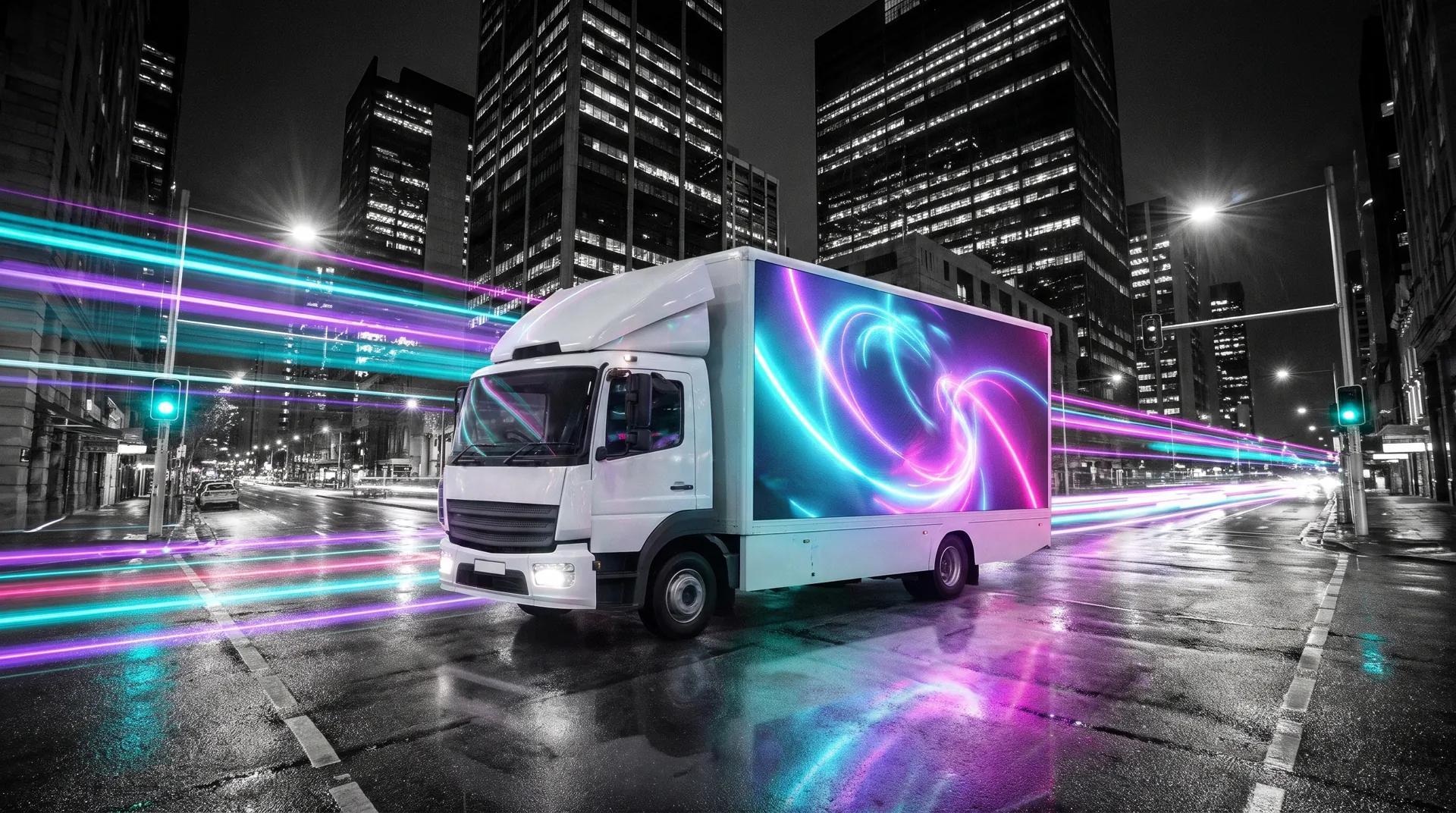
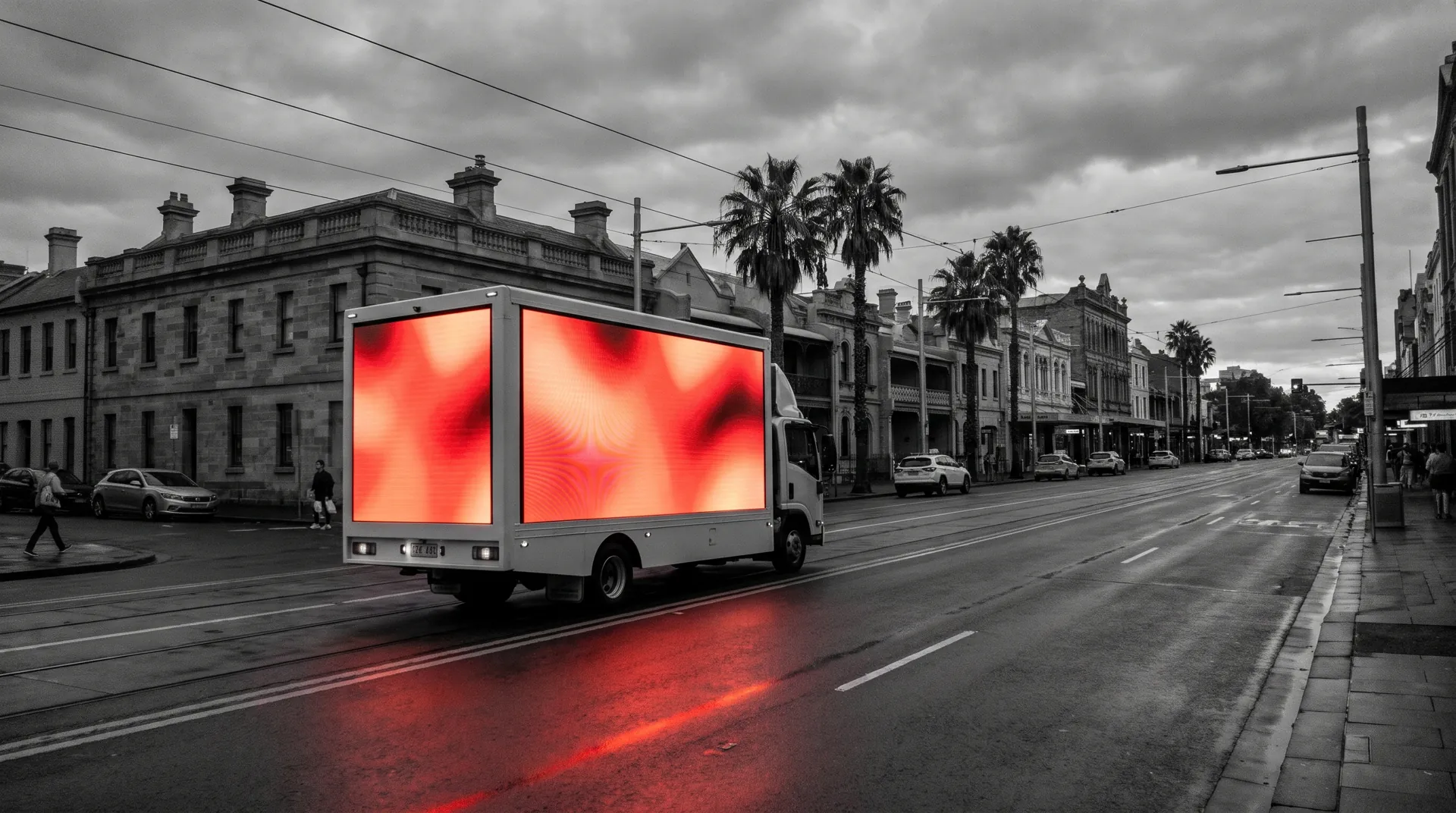
A truck with large digital screens drives a custom route through the suburbs, streets and venues you choose, and parks where crowds gather. With Digifyads, each truck has three P4 LED screens (two 3.84m × 1.92m sides and a 1.92m × 1.76m rear), an audio system for stationary activations, a professional driver and live GPS tracking.
What it costs
- Event Blast: $99 + GST per hour, three-hour minimum ($297 + GST)
- All-Day Takeover: $699 + GST for an eight-hour day, with the fourth day free when you book three
- Custom campaigns: tailored proposals for multi-truck, weekly or monthly runs
Driver, fuel, screens, audio and GPS are all included. See the pricing page.
Strengths
- Targeting by place and time. You choose exactly which streets, suburbs and venues, and when.
- Very high visibility. Large, bright, moving screens at eye level are hard to ignore.
- Flexible commitment. Book three hours or three months.
- Unblockable. No ad blockers, skip buttons or feeds to scroll past.
- Great for dates and events. Perfect for driving traffic to a specific place on a specific day.
- Changeable creative. Swap messages by time of day or update them mid-campaign.
- Proof of delivery. GPS shows exactly where and when your ad ran.
Limitations
- Short exposure per person. Messages must be simple and readable in seconds.
- Not directly clickable. Response tracking needs promo codes, QR codes, campaign URLs or branded search monitoring.
- Reach depends on the plan. A poorly planned route wastes the truck's potential.
Best for
Store openings, sales events, product launches, event promotion, recruitment drives, real estate open homes and building awareness in specific suburbs quickly.
Static roadside billboards
What you get
A fixed sign, printed or digital, at one location for a contract period, typically weeks or months. On digital billboards your ad usually shares the screen with several other advertisers in a rotation.
What it costs
Pricing varies widely with location, size, format and contract length, and premium Adelaide sites are often booked well in advance by national brands. Expect to commit to a minimum period rather than a day or a few hours, plus production costs for printed faces.
Strengths
- Long-term presence. The same commuters see your message every day for weeks.
- Massive scale on major roads. Big sites on major arterials and freeways deliver large audiences.
- No operational effort. Once it is up, it stays up.
Limitations
- One location only. You reach whoever passes that spot and no one else.
- Less flexible. Longer minimum terms and lead times.
- Shared screen time. On digital sites, your ad may only appear for a fraction of each minute.
- Often above eye level. Large sites are designed for distance viewing from vehicles.
Best for
Sustained brand presence on a major commuter route, especially for businesses whose customers all pass the same corridor.
Truck or static billboard?
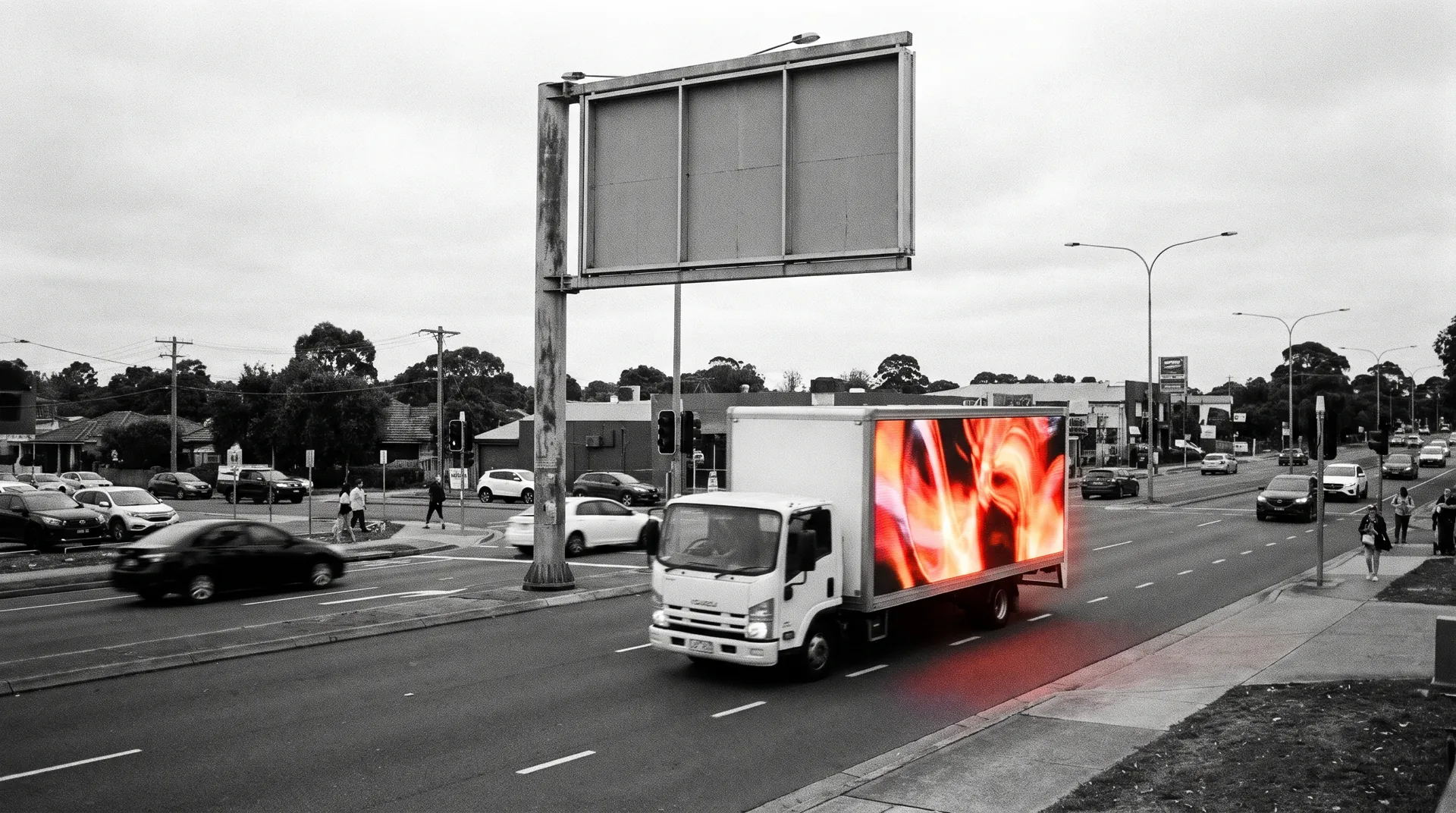
If your customers are spread across several suburbs, or you need to be in a specific place on a specific day, a truck usually makes more sense. If your customers all pass the same road every day and you want to own it for months, a static site may be better. Many brands use both: a long-term static site for presence, plus truck bursts for launches and events.
Social media ads (Facebook and Instagram)
What you get
Ads shown in feeds, stories and reels, targeted by location, age, interests and behaviour, with detailed reporting on impressions, clicks and conversions.
What it costs
You set the budget, anywhere from a few dollars a day upwards, and pay based on impressions or clicks in an auction. Costs vary with competition, audience and season.
Strengths
- Precise targeting. Narrow audiences by demographics and interests.
- Click-through. People can tap straight to your website or booking page.
- Detailed reporting. Impressions, clicks, cost per result and conversions.
- Low minimum spend. Start small and scale what works.
Limitations
- Easy to scroll past. Ads compete with everything else in the feed, and people have learned to ignore them.
- Small screen. Your brand gets a few square centimetres on a phone.
- Rising costs and creative fatigue. Ads need constant refreshing as audiences tire of them.
- Changing audiences. Some groups, younger people in particular, are harder to reach on some platforms than they used to be.
Best for
Direct response campaigns where you want clicks, bookings and online sales, and retargeting people who have already shown interest.
Truck or social ads?
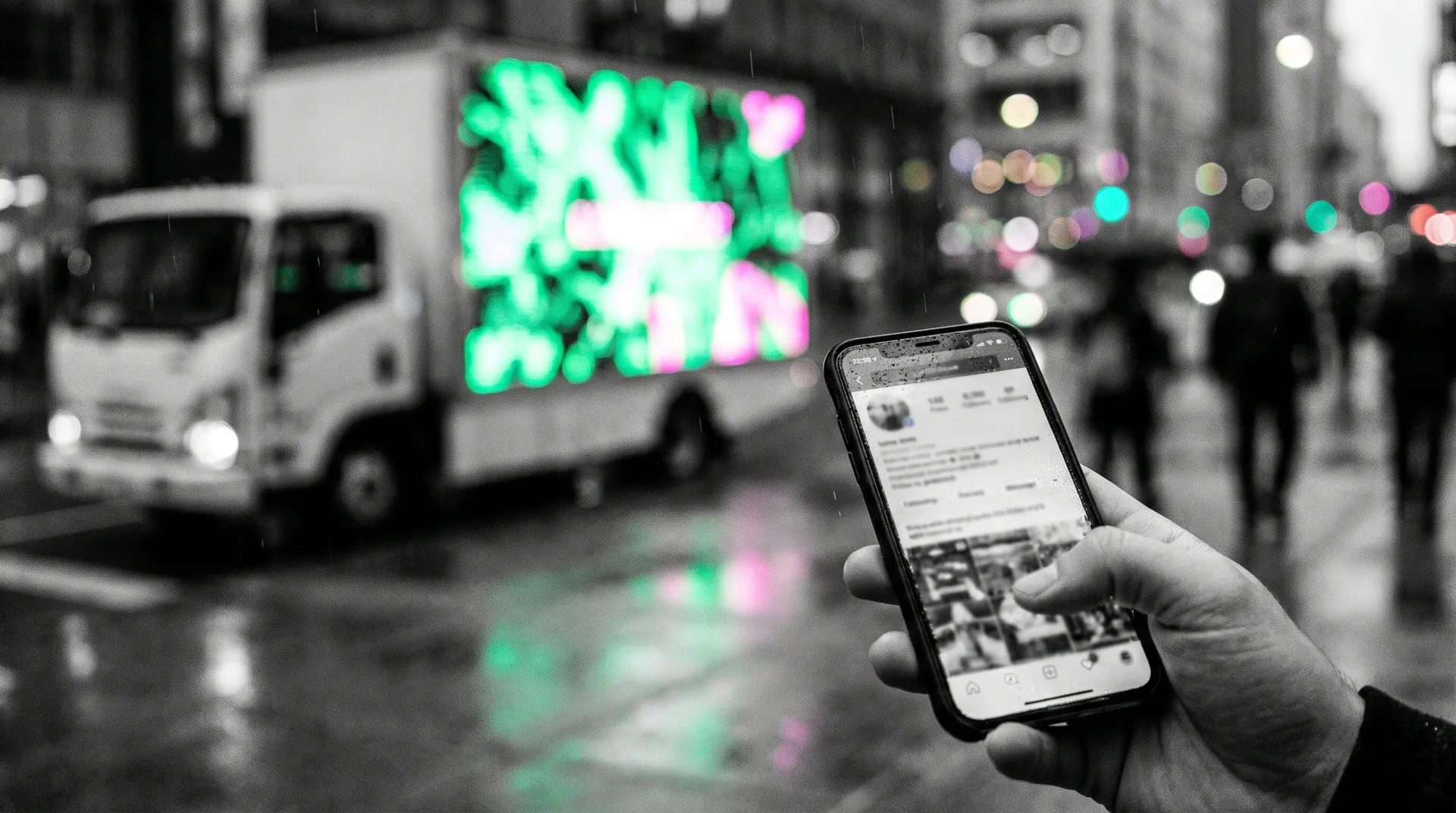
This is the comparison clients ask about most, and the honest answer is that they are better together. Social ads are excellent at capturing intent and driving clicks. Trucks are excellent at creating attention and recognition in the physical world. Run social ads to the same suburbs during a truck campaign, and people see your brand on a giant screen in the street and then again on their phone. That second exposure feels familiar rather than random, and familiarity tends to lift response.
Radio
What you get
Spots played on commercial radio stations across a schedule, reaching listeners at home, at work and in the car.
Strengths
- Broad reach across the city.
- Repetition at scale.
- Strong for audio brands and jingles.
Limitations
- No visuals. Listeners cannot see your product, logo or location.
- City-wide rather than suburb-specific. You pay to reach listeners well outside your trade area.
- Production and schedule commitments.
Best for
Broad, city-wide awareness for businesses that serve the whole metro area.
Truck or radio?
If your business serves the whole city and your message works without pictures, radio can be efficient. If you need to show your product, reach specific suburbs or drive people to one location, a truck is usually the better fit. Some clients combine them by running a radio schedule and parking the truck at the radio station's outside broadcast or event.
Letterbox flyers and print
What you get
Printed material delivered to homes in chosen suburbs, or ads in local papers and magazines.
Strengths
- Suburb-level targeting.
- Room for detail. Menus, price lists and maps.
- Tangible. Some people keep flyers on the fridge.
Limitations
- Low attention. Much letterbox material goes straight into the recycling.
- Design, print and distribution lead times.
- No movement or sound.
Best for
Detailed offers to specific households, especially for food delivery, trades and local services.
Truck or flyers?
Flyers carry more detail. Trucks carry more impact. A good combination is a truck in the suburb on the weekend a flyer drop lands, so the flyer feels familiar when it arrives.
Side-by-side summary
Targeting by location and time: Trucks excel. Static billboards cover one spot only. Social ads target well by location online. Radio is broad. Flyers target suburbs.
Visual impact: Trucks and large billboards lead. Social is limited by phone screen size. Radio has none.
Flexibility of booking: Trucks (hourly or daily) and social (any daily budget) are the most flexible. Static billboards and radio usually need longer commitments.
Ability to change the message: Trucks and social can change quickly. Digital billboards can change with notice. Printed billboards and flyers cannot.
Click-through and direct response: Social leads. Trucks, billboards, radio and flyers need codes, URLs, QR codes or search tracking.
Best single use: Trucks for date-driven traffic and local awareness. Static billboards for long-term presence on one route. Social for clicks and conversions. Radio for city-wide reach. Flyers for detailed household offers.
Working out the value of a truck campaign
Rather than chase a single "cost per impression" figure, which varies with route, timing and how you count, we suggest a simpler test before booking any channel: what result would make this spend worthwhile?
Take an All-Day Takeover at $699 + GST. Ask:
- Retail or hospitality: How many extra customers, at your average sale and margin, would cover $699? For a business with a $60 average sale and a healthy margin, that might be a few dozen extra transactions across the campaign.
- Real estate: Would one extra qualified buyer at an open home or auction justify it? Usually yes, comfortably.
- Recruitment: What does a single successful hire cost you through job boards or agencies? Often a lot more than a day of truck time.
- Events: How many extra tickets cover the cost? Often a small number.
Then set up the tracking that will tell you whether you hit that number: a truck-only promo code, a campaign URL, a QR code for stationary moments and a "How did you hear about us?" question. That gives you a clear, honest answer instead of a vague impression.
A sample combined campaign for an Adelaide business
Here is an illustrative example of how a mid-sized retailer launching a new store might split a modest budget across channels:
- Two weeks before opening: social ads targeting a 5km radius around the store, building awareness and collecting event RSVPs.
- Opening week, days 1 to 3: three All-Day Takeovers driving the surrounding suburbs during commute and school-run peaks, with "Grand opening Saturday" and the address.
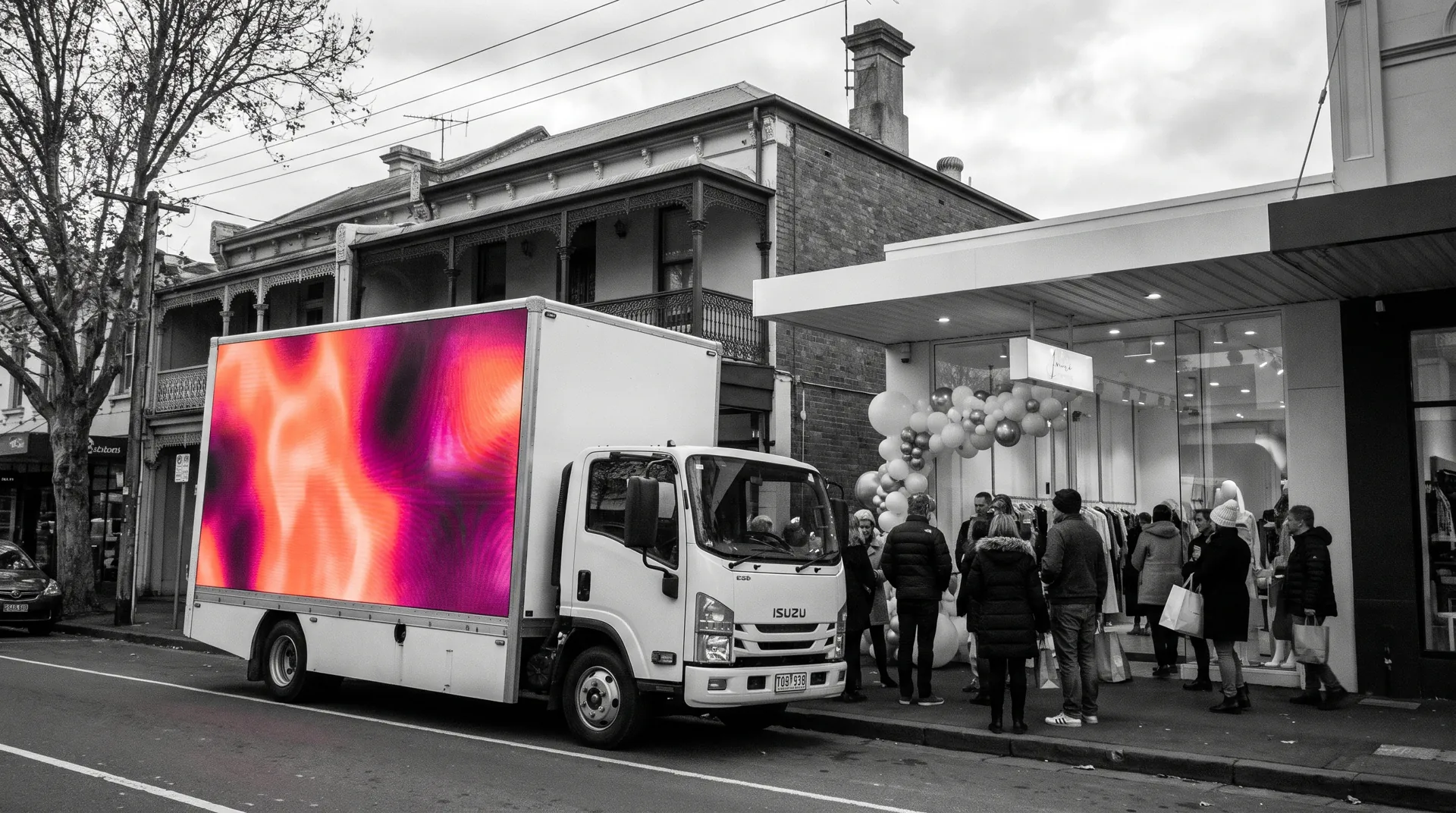
- Opening day (day 4, free with the 3-day booking): the truck parks near the store with sound running and a "Today only" offer and promo code.
- During and after: retargeting ads to everyone who visited the website, plus photos and video of the truck and the crowd shared on the store's own social channels.
- Measurement: promo code redemptions, website and branded search lift, and opening-day sales against forecast.
Each channel does what it does best, and each makes the others work harder.
Questions to ask any mobile billboard provider
If you decide a truck is right for your campaign, these questions will help you compare providers and avoid surprises:
- What exactly is included? Check whether the driver, fuel, all screens, audio and reporting are in the price, or charged on top.
- How big and bright are the screens? Size and brightness decide whether your ad is readable in full sun and from across the road.
- How many screens will show my ad? Side screens reach pedestrians and the next lane. A rear screen reaches the car stopped behind at the lights.
- Will I share screen time with other advertisers? Some trucks rotate several brands. Know how much of each minute is yours.
- Who plans the route? Look for a provider who builds the route around your audience, not a fixed loop.
- What reporting do I get? GPS tracking and route history should be standard.
- Can I change creative during the campaign? With digital screens, you should be able to.
- What happens in bad weather or if a road is closed? Ask about weatherproofing and backup routes.
At Digifyads, every package includes the driver, fuel, all three screens, audio and live GPS reporting, with custom routes and creative changes available throughout.
Common questions
Is a mobile billboard cheaper than a regular billboard?
For short campaigns, usually yes, because you can book by the hour or day rather than committing to weeks or months. For a long-term presence on a single road, a static site may work out cheaper per day.
Can a truck replace my social media advertising?
We would not recommend it. Trucks and social ads do different jobs, and they work best together. The truck creates attention and recognition, and social captures the response.
How do I know the truck actually went where it was supposed to?
Every Digifyads campaign includes live GPS tracking and a full route history showing location, dwell time and speed.
What is the best package for a first campaign?
For an event, opening or flash sale, start with an Event Blast of three or more hours around the key moment. For awareness or a launch, the All-Day Takeover with the fourth day free gives you the repetition that builds recognition.
The bottom line
No channel wins every time. Social ads are hard to beat for clicks. Static billboards are hard to beat for months-long presence on one road. Mobile billboard trucks are hard to beat when you need to be seen by the right people, in the right places, at the right time, especially around dates that matter.
If that describes your next campaign, request a free quote and we will plan a route around your customers. You can also call 0455 665 257 or email info@digifyads.com.au.